Reading water is the single most important skill in whitewater kayaking. Here is how to start seeing what the river is telling you.
Why river reading matters
You can have the best paddle technique in the world, but if you cannot read the water, you will always be reacting instead of planning. River reading means understanding what the current is doing, where the safe lines are, and where the hazards hide. It turns a chaotic rapid into something you can break down and navigate.
The V shape
Water flowing between two obstacles creates a V shape pointing downstream. This is your friend. The point of the V is usually the deepest, cleanest line through a rapid. Look for these Vs and aim for the point. On the flip side, a V shape pointing upstream usually marks a rock just below the surface.
Eddies and eddy lines
An eddy is a pocket of calm water behind an obstacle where the current reverses. Eddies are where you rest, scout, and set up for the next move. The boundary between the eddy and the main current is the eddy line. Crossing it is one of the fundamental skills in whitewater. The stronger the current, the more aggressive you need to be when crossing.
Waves and holes
Standing waves form where fast water hits slower water. They are usually fun and you can punch through them. Holes form where water pours over a ledge and recirculates back upstream. Small holes are playful. Bigger holes can hold you and your boat. Learning to tell the difference from upstream is a critical safety skill.
Practising on the river
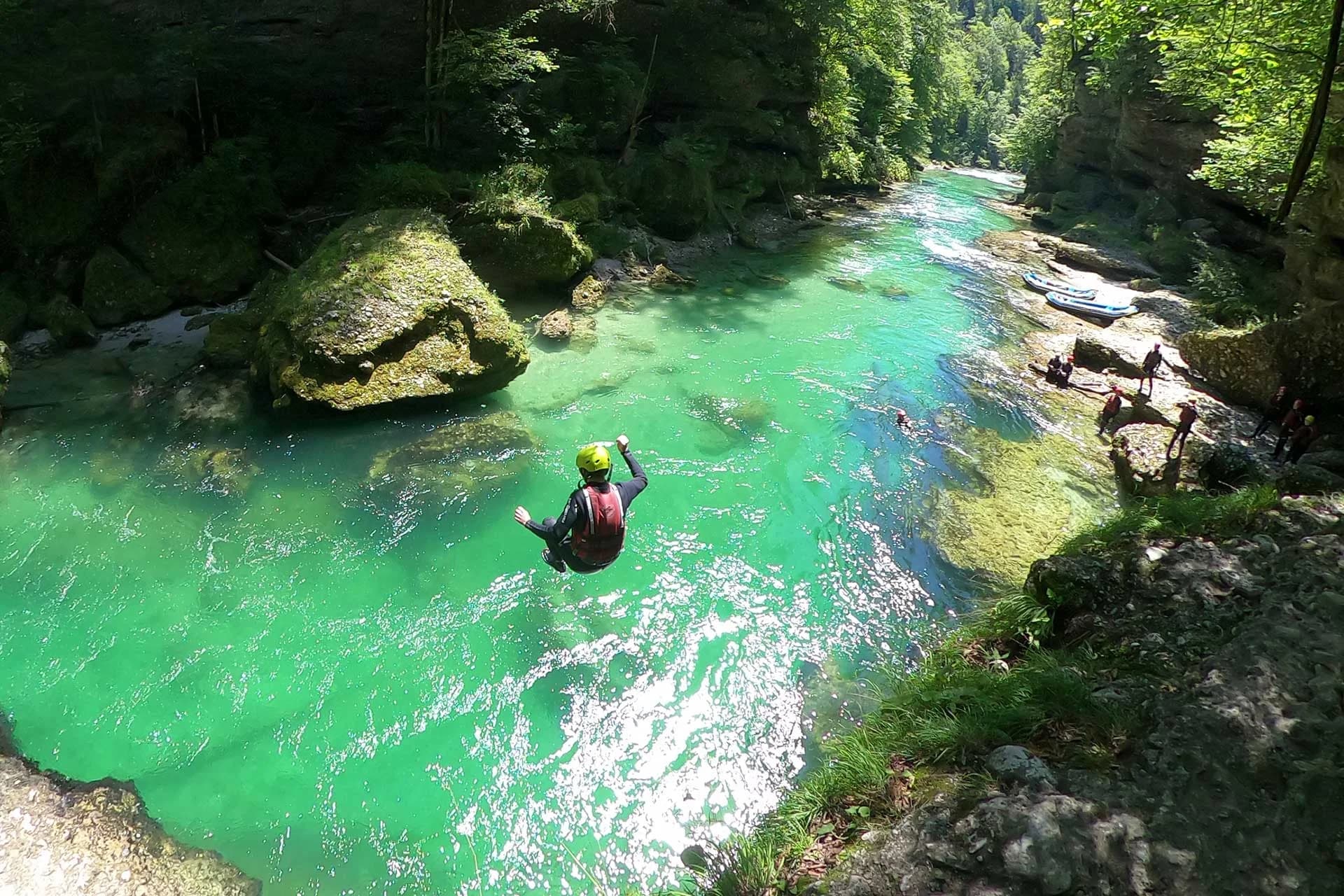
The best way to get better at reading water is to spend time looking at it. Sit on the bank and watch a rapid before you paddle it. Try to predict where the current will push you. Then paddle it and see if you were right. The Salza is great for this because the water is clear enough to see the current patterns beneath the surface, and the continuous rapids give you plenty of chances to practise.
Want to put this into practice?
Book a coaching session and we will work on this together on the water.
Get in Touch